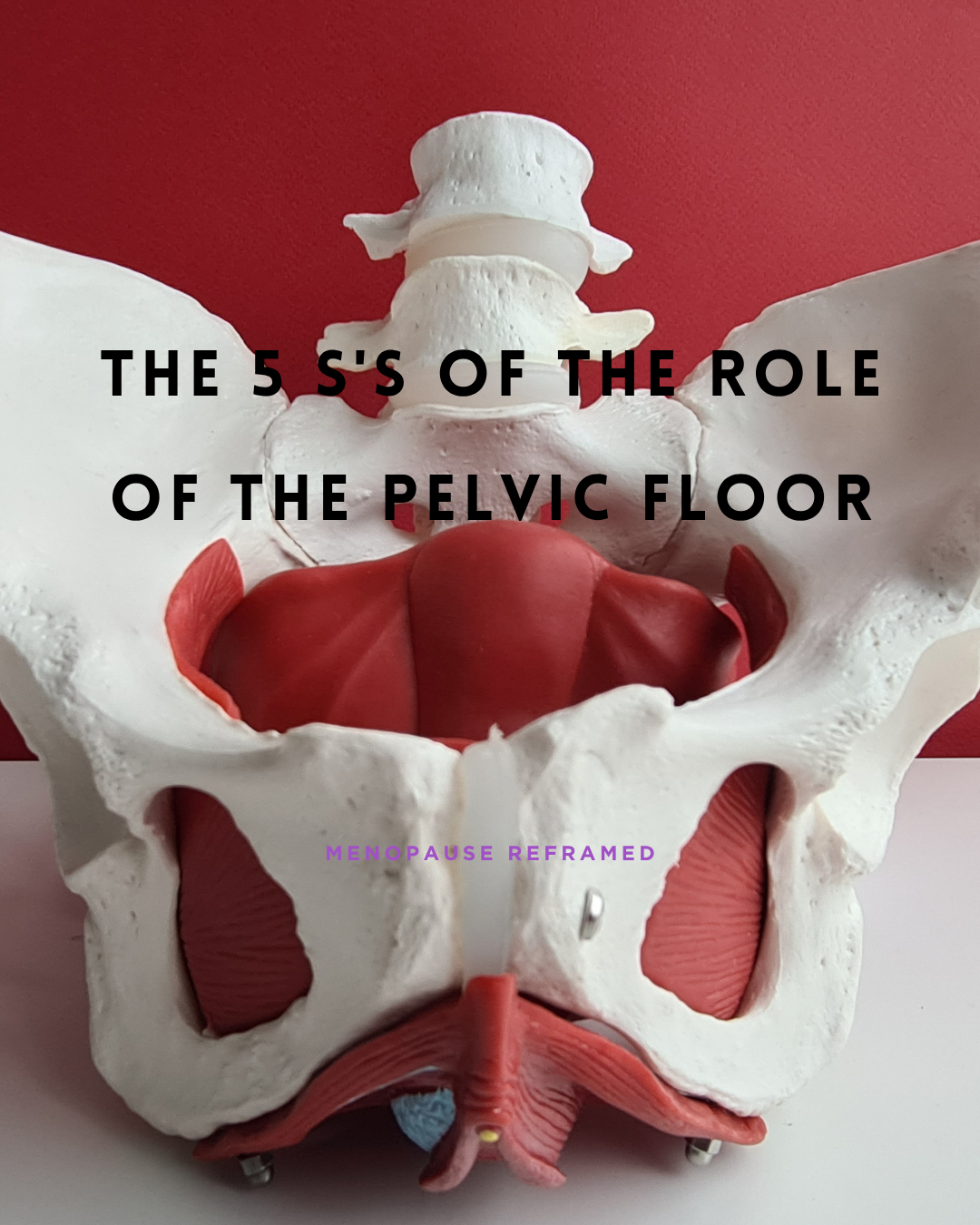
Did you know, up to one-third of the world’s population will experience a pelvic-floor problem – but numerous surveys still show many people have no idea what a pelvic floor is or its purpose.
One survey of 1,000 women found 𝗼𝗻𝗲 𝗶𝗻 𝘀𝗶𝘅 didn’t know where it was, and one-quarter didn’t know what it did!!!
As for its role, your pelvic floor is a multi-tasker! But it does not work in 𝗜𝗦𝗢𝗟𝗔𝗧𝗜𝗢𝗡! It is part of a phenomenal TEAM.
Let’s look at the role of the pelvic floor: I call these the 𝟱 𝗦’𝘀
It 𝘀𝘂𝗽𝗽𝗼𝗿𝘁𝘀 the pelvic organs: The pelvic floor muscles sit at the base of the pelvis and form the bottom of the pelvis like a bowl. This includes the bladder and rectum as well as the uterus in those with a vagina and the prostate in those with a penis, and intestines. These muscles need to have good strength, endurance, and tone to be able to support these organs throughout the day, especially as we are active.
It contributes to 𝘀𝗲𝘅𝘂𝗮𝗹 health and function, including arousal and orgasm: In all individuals, regardless of gender, the pelvic floor muscles play a large role in sexual function. The muscles are active during sex and orgasms. They help with tone and sensation and maintaining erections. While tone can improve pleasure for both partners, the pelvic floor muscles need to be able to relax at the right times so that entry and sex are painless.
It helps to 𝘀𝘁𝗮𝗯𝗶𝗹𝗶𝘇𝗲 your hips and trunk, especially when walking and standing: The pelvic floor muscles work as a part of the core muscles. The core is like a barrel that helps to keep the spine, pelvis, and abdominal contents stable and secure. The diaphragm, our primary breathing muscles, makes up the top of the barrel. The transverse abdominus, a deep abdominal muscle, makes up the front of the barrel. The back of the barrel is made up of the multifidus muscles. The bottom of the barrel is the pelvic floor muscles. These muscles all need to work together to keep our bodies strong during activity.
It has the role of 𝘀𝗽𝗵𝗶𝗻𝗰𝘁𝗲𝗿. This function ensures that things are kept closed when we want them closed (i.e. preventing leakage of urine and fecal matter), and that things open when we need them to (i.e. successful urination and bowel movement). While there are other involuntary muscles that assist in this job, the pelvic floor muscles have an important job. They need to be coordinated to do the right thing at the right time.
It is a 𝗦𝘂𝗺𝗽 Pump: Just like the calf muscles in your leg act to pump blood and lymphatic fluid back up towards your heart, the pelvic floor muscles act as a blood/lymph pump for the pelvis. A loss of this “sump-pump” action can contribute to swelling or pelvic congestion.
The biggest take away is that the pelvic floor cannot perform all these functions without the abdominal muscles, diaphragm, and back muscles supporting it. They work as a TEAM! It is, therefore, critical to strengthen the surrounding muscles that fire with the pelvic floor to have any lasting changes. That is why teaching and advocating Kegels (an isolated movement) as the only pelvic floor work required, is problematic. The goal to improve pelvic floor muscle strength is to reinforce proper movement patterns of the core team.
Know your pelvic floor, and keep it supporting you. Don’t be the one who will one day say: ‘Why did nobody tell me this 10 years ago?’
I help women build strength and resilience, and also stay consistent with their workouts/nutrition throughout their menopause transition and beyond. Let me know how I can help you.